Hurricane season in Cabo San Lucas, Mexico
Hurricane season in Cabo San Lucas, Mexico, runs from 15 May to 30 November, and the record of this coast says something an owner abroad can use. Of five hurricanes that the National Hurricane Center's reports place at or near Cabo San Lucas since 2003, three were under an official hurricane warning for about a day, or less, before they arrived, and after the strongest of them the airport stayed closed to ordinary flights for about a month. Notice, here, is not something to plan around. The date that matters is the one by which the house is ready without anybody having to be told.
This guide sets out the official season and how it differs from the Caribbean one, the weeks in which storms have actually reached the southern tip of the peninsula, what Odile changed, where the warnings come from and how far ahead they came, and what is finished before the season and checked after a storm. What the salt, the desert and Odile do to the fabric of a house here is the subject of the Sea of Cortez guide. How a house in this part of Baja California Sur is looked after through the rest of the year is on the page for Los Cabos.
When is hurricane season in Cabo San Lucas, Mexico?
Officially from 15 May to 30 November: Los Cabos faces the eastern Pacific, and the National Hurricane Center states that the eastern Pacific hurricane season runs from May 15 to November 30. Anyone asking when hurricane season is in Mexico gets two answers, because the Caribbean and Gulf coasts follow the Atlantic season, which opens two weeks later, on 1 June.
Mexico's own disaster prevention agency gives the same split in its own words: the season comienza oficialmente la temporada para el océano Pacífico in May and for the Atlantic in June, and it calls both fechas aproximadas. The useful reading of 15 May is not that storms begin then. It is that the Pacific calendar is the longer of the two, and that a house in Los Cabos is inside it for six and a half months of the year.
The ordinary weather of the same months, the near absence of rain from November to June and the late-summer weeks when almost all of it falls, is set out in the weather in Cabo for an owner. This guide keeps to the storms.
How does the Pacific season differ from the Caribbean one?
It starts earlier and spreads its activity over more of the year: the National Hurricane Center notes that eastern Pacific activity tends to be spread out over a longer portion of the season than in the Atlantic, with most tropical cyclones occurring between late June and early October. The first hurricane of an average eastern Pacific season tends to form in late June, against early to mid-August on the Atlantic side.
The difference that matters more to an owner is not the calendar but the notice. On the Caribbean coast the two storms most remembered in Cancún both came with more than two days of official warning, as set out in hurricane season in Cancún. At the southern tip of Baja California the record, read storm by storm below, is shorter: in one of those reports the National Hurricane Center measures the warnings against the typical 48- and 36-h lead times and finds them short. On the Pacific coast further south, in Acapulco in 2023, the notice was there and the strength was not, which is the subject of a hurricane in Acapulco.
So the same advice does not travel between coasts. A plan built on the Caribbean assumption, that there will be two days to carry it out, is a plan that may have one day, or less, at Cabo San Lucas.
Which months have historically brought storms to Los Cabos?
September above all, with late October as the exception that keeps the season open. Of the five hurricane reports this guide reads, four storms reached the tip of the peninsula within three weeks of each other: John came ashore around 0200 UTC 2 September in 2006, Newton struck Cabo San Lucas on 6 September 2016, Odile made landfall at 0445 UTC 15 September in 2014, and Marty at 0930 UTC 22 September, near San Jose del Cabo, just east of Cabo San Lucas in 2003. The fifth, Norma, made landfall in the state of Baja California Sur near El Pozo de Cota as a 70-kt hurricane around 2015 UTC 21 October 2023, west-northwest of Cabo San Lucas.
A storm need not be a hurricane to matter here. Tropical Storm Lidia, in 2017, passed very close to Cabo San Lucas at the end of August, and the day it passed is the wettest single day in the record of the Cabo San Lucas weather station, as set out in the guide to the weather in Cabo. On a coast where it hardly rains, a storm that never reaches hurricane strength can still be the event a roof is tested by.
The rest of the long season is not empty, and the official dates exist for a reason. But the Cabo San Lucas, Mexico, hurricane season, read from the storms that actually reached the tip of the peninsula, has a narrow centre late in the basin's busy stretch, which the National Hurricane Center places between late June and early October. That centre is the window a house has to be ready for, the end of August is the date by which it should be, and October is not yet the time to undo it.
What did Hurricane Odile in 2014 change for houses there?
It set the measure of what this coast can receive, and it showed how long the house can stay out of reach afterwards. The National Hurricane Center records it as the first major hurricane to strike this region in 25 years, tied with Olivia of 1967 as the strongest to make landfall in Baja California, and adds that the airport was closed to everything except for shipments of humanitarian relief until about a month after landfall.
How Odile changed the way houses on this coast are built and checked, the salt-rated hardware, the openings, the infrastructure that was down for weeks, is set out in the guide to the Sea of Cortez, and it is not repeated here. What belongs to the season is the second half of the lesson: a month in which no flight brings a specialist and no visit can be arranged from abroad.
Read from the owner's side, that rewrites the order of the work. Anything that has to be done to the house has to be done before the storm, because the days after it are not available; and the record of how the house stood, dated and photographed, has to exist before the storm too, because for weeks afterwards nobody may be able to make a new one. In San José del Cabo the report notes drinking water unavailable and communications left inoperative, which is the reason a phone call from abroad is not a plan.
Where do official warnings come from, and how far ahead did they come?
Watches and warnings for the Mexican coast are issued by the government of Mexico, through its National Meteorological Service, with the National Hurricane Center's advisories alongside; the Center's own reports list them as coastal watches and warnings issued by the government of Mexico. They are turned into alert levels through the SIAT-CT, the early warning system for tropical cyclones, which Cenapred describes as able to warn hasta 72 horas antes de que el fenómeno llegue a un punto geográfico en específico, on un semáforo de cinco colores from blue to red.
On the ground the order is set by law. The Ley General de Protección Civil gives the first specialised response to la autoridad municipal o de la demarcación territorial correspondiente que conozca de la situación de emergencia, and only beyond its capacity does it pass to the state; in Baja California Sur that is the Coordinación Estatal de Protección Civil, whose state law sets three successive states of emergency, prealerta, alerta y alarma.
Seventy-two hours is what the system can do at best. What it has done at the tip of the peninsula is in the reports. For Marty, a hurricane warning was issued at 1500 UTC 21 September, about 18.5 h prior to the arrival of the center; this is less warning than is typically provided or considered desirable. For Odile, the forecasts did not fully describe the threat to the Baja California until about a day before landfall. For Newton, the watch and warning for the southern peninsula only provided lead times of 30 h and 24 h, respectively, before the onset of tropical-storm-force winds. John and Norma came with two days: for John a hurricane warning was issued for southern Baja California at 0300 UTC 31 August, 47 h prior to landfall, and for Norma the warning came slightly more than 47 h prior to landfall. Read side by side:
| Hurricane | Where it reached land | Intensity there | Hurricane Warning ahead of it |
|---|---|---|---|
| Marty, 22 September 2003 | Near San José del Cabo | Category 2, 85 kt | About 18.5 hours before the centre |
| John, 2 September 2006 | Cabo del Este, about 40 n mi northeast of Cabo San Lucas | Category 2, near 95 kt | 47 hours before landfall |
| Odile, 15 September 2014 | Just east of Cabo San Lucas | Category 3, 110 kt | About 26 hours before landfall |
| Newton, 6 September 2016 | Struck Cabo San Lucas, landfall near El Cuñaño | Category 1, 75 kt at landfall | 24 hours before tropical-storm-force winds |
| Norma, 21 October 2023 | Near El Pozo de Cota, west-northwest of Cabo San Lucas | Category 1, 70 kt | Slightly more than 47 hours before landfall |
The column that matters to an owner abroad is the last. Three of five storms gave about a day or less, and a day is enough to close a house whose plan is already written, its openings already fitted and its keys already held by the person who will act. It is not enough to arrange any of those things from another country.
What is arranged before the season, and checked after a storm?
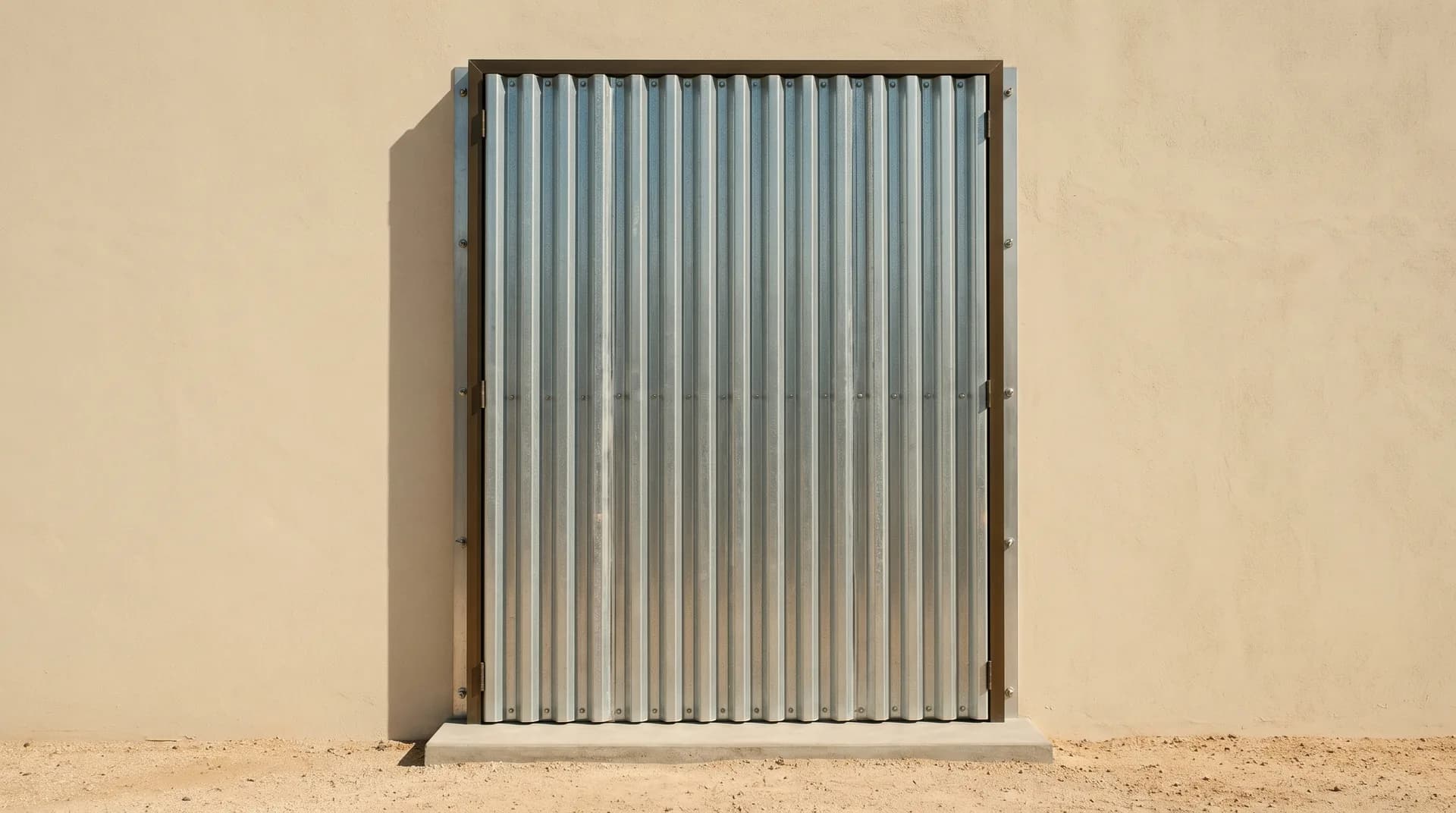
Before the end of August, everything that has to keep working without anybody there: storm panels or shutters fitted, tested and stored where the person closing the house can reach them, roof and terrace drains cleared, anything loose outside assigned a place indoors, and a dated set of photographs of the house as it stands. After a storm, the same list read backwards, with photographs from the same places, as soon as the authorities on the ground allow anybody back in.
The before list is ordinary scheduled work rather than an emergency, and its content belongs to preventive maintenance. What turns it into storm readiness is the date: the quiet months of the long season, not the eighteen or twenty-four hours after a warning, which are the same hours every other house on the coast has. Which works are booked into that window, rather than chased in September, is a decision taken once a year as part of an annual plan.
The decision about closing the house is written down too: the alert colour at which it is closed, who closes it, who holds the keys, and what that person reports and when. Going back in has a constraint the owner does not control, because the law gives the municipal civil protection unit las atribuciones de vigilancia y aplicación de medidas de seguridad in the first instance. What the person with the keys sees should come back dated and itemised, with photographs, rather than as reassurance over a line that may not be working; what that arrangement looks like the rest of the year is set out in what a property manager does, and the report that carries it, month after month and after a storm, is the monthly owner statement.
When is hurricane season in Cabo San Lucas, Mexico?
Officially from 15 May to 30 November, the eastern Pacific hurricane season as defined by the National Hurricane Center, which notes that most eastern Pacific tropical cyclones occur between late June and early October. Of five hurricanes that National Hurricane Center reports place at or near Cabo San Lucas since 2003, four arrived between 2 and 22 September (John, Newton, Odile and Marty) and one, Norma, on 21 October 2023.
When is hurricane season in Mexico?
Mexico has two seasons. The Pacific coast, including Los Cabos and Acapulco, follows the eastern Pacific season from 15 May to 30 November; the Caribbean and Gulf coasts, including Cancún, follow the Atlantic season from 1 June to 30 November. Cenapred describes both start dates as approximate.
How much warning was there before hurricanes reached Cabo San Lucas?
Often about a day. According to the National Hurricane Center's reports, the hurricane warning for Marty in 2003 came about 18.5 hours before the centre arrived, which the report calls less than is typically provided or considered desirable; for Odile in 2014 it came at 0300 UTC on 14 September, about 26 hours before landfall at 0445 UTC on 15 September; for Newton in 2016 it came 24 hours before tropical-storm-force winds. For John in 2006 and Norma in 2023 it came about 47 hours before landfall.
Who issues hurricane alerts for Baja California Sur?
The government of Mexico issues the coastal watches and warnings through its National Meteorological Service, with the National Hurricane Center's advisories alongside. Cenapred's early warning system for tropical cyclones, the SIAT-CT, can warn up to 72 hours ahead on a five-colour scale from blue to red. Under the Ley General de Protección Civil the first response on the ground belongs to the municipal authority, then to the state, which in Baja California Sur is the Coordinación Estatal de Protección Civil.